Field NotesHong Kong · Central Market & Mid-LevelsOctober 2026
In Fan Ho's Footsteps
A day on the stone stairways of Hong Kong with a Leica M11 Monochrom, two lenses and the Oberwerth Q Backpack.
A short film from the day: Hong Kong on the Leica M11 Monochrom. Music: “In This Fall”, licensed via Artlist.
Some places in photography feel less like locations and more like pilgrimage sites. For me, one of them is the stairway at Central Market in Hong Kong where Fan Ho made Market Stairway in 1959. I had seen that frame in books for years. In October I finally stood where he stood.
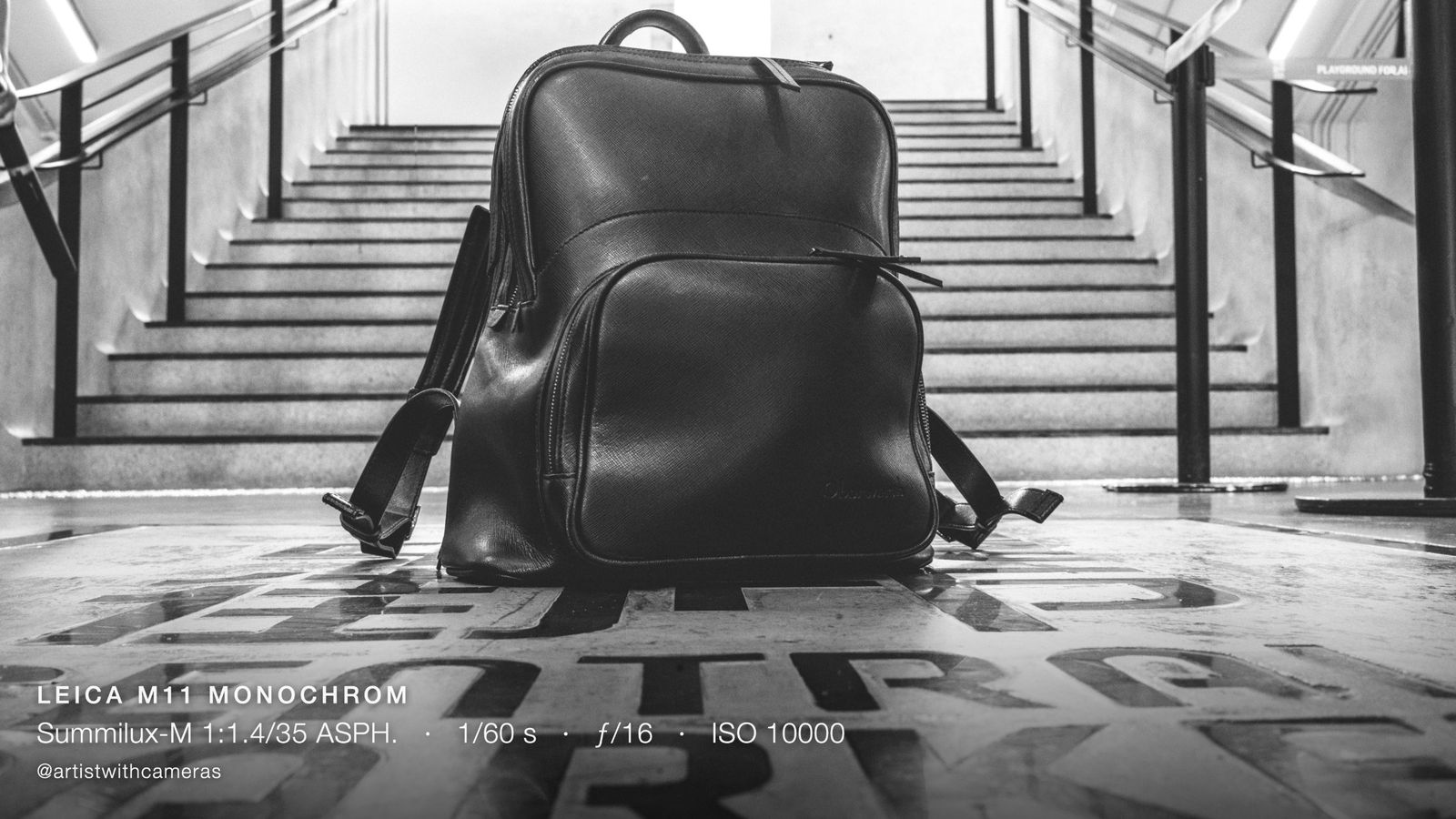
It was an honor to be there. I set the backpack down at the foot of the stairs, waited for people to climb in and out of the light, and tried to feel what he was doing: watching the stairway as a stage, and waiting for the one moment when the light, the shapes and a single figure all lined up.
See the original: Fan Ho's photographs, including his Hong Kong work of the 1950s, are represented by Blue Lotus Gallery, which looks after his estate.
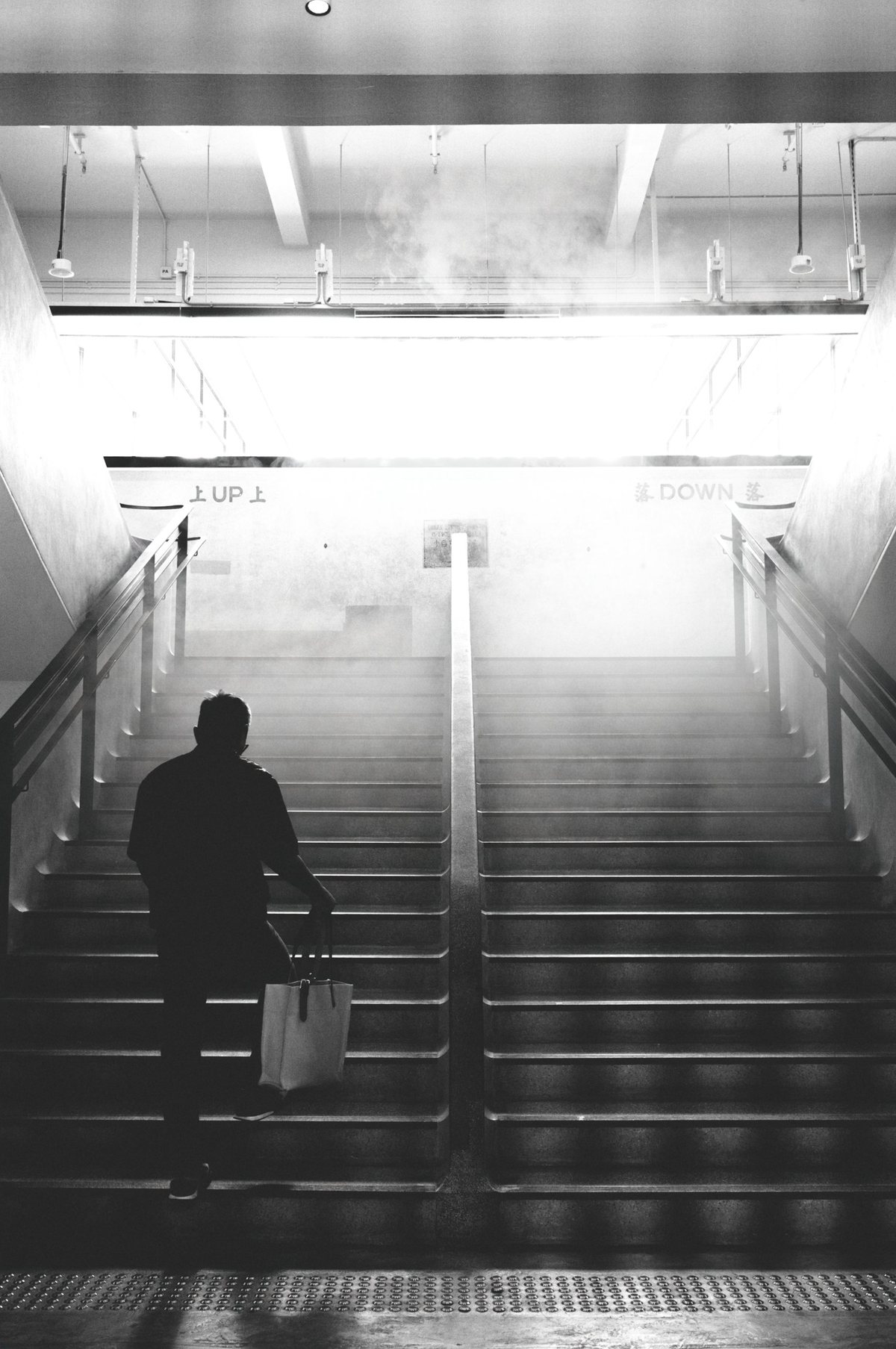
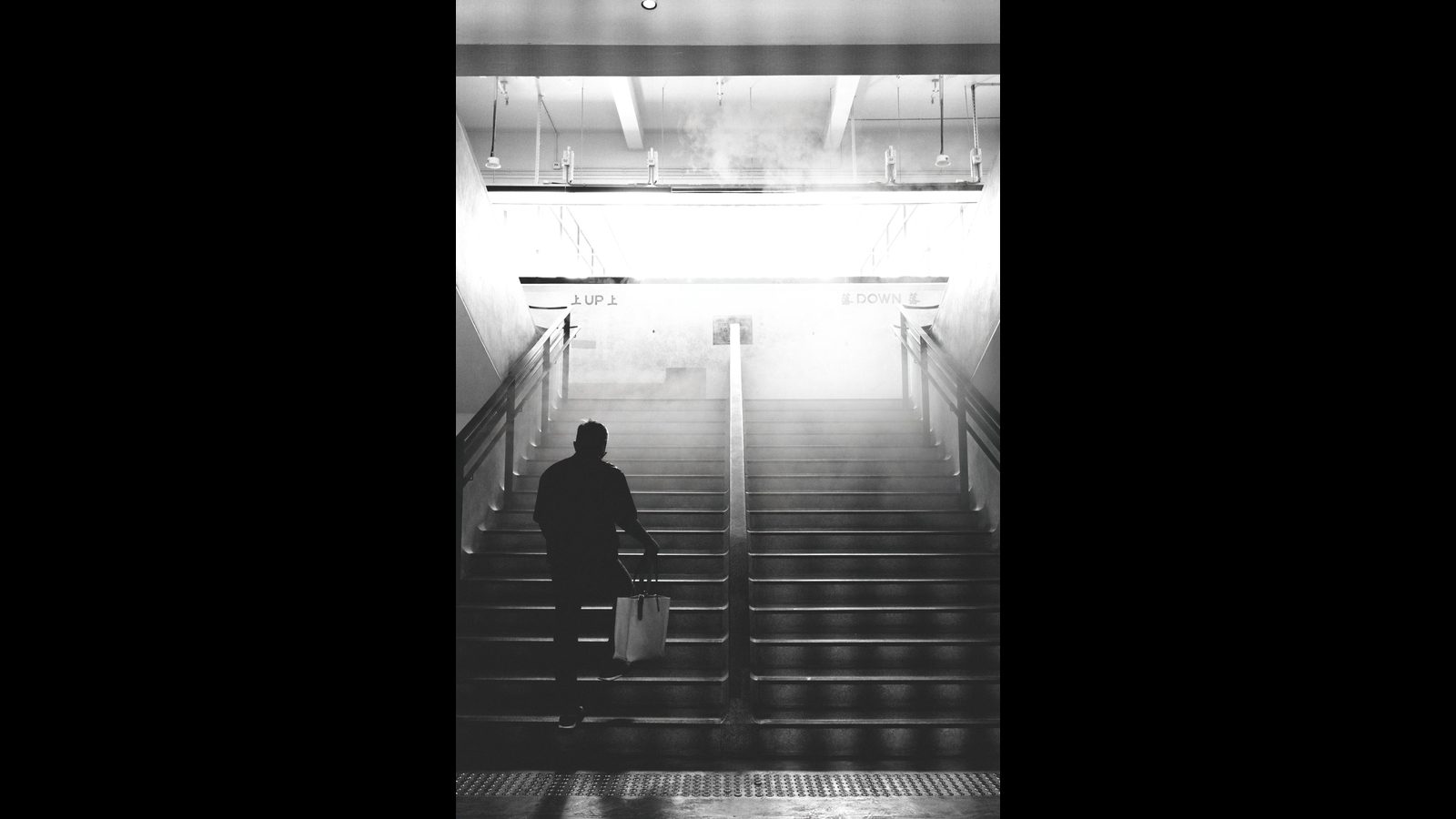
Up and down, in the spirit of Fan Ho's stairways. Leica M11 Monochrom · Summilux-M 35mm f/1.4 ASPH. · 1/320 s · f/16 · ISO 1600
Who Fan Ho was
Fan Ho was born in Shanghai in 1931 and came to Hong Kong with his family in 1949. He taught himself photography with a Rolleiflex twin-lens camera his father gave him, and through the 1950s and 1960s he photographed the city's streets, markets and stairways in black and white. He became known as a master of light and shadow. He lived on MacDonnell Road in the Mid-Levels and walked down through the backstreets and narrow lanes to Central, the same hills I spent the day climbing.
He later directed films, and his books Hong Kong Yesterday (2006) and A Hong Kong Memoir (2014) brought his early work to a new generation. He died in 2016, aged 84.
Hong Kong in monochrome
1 / 8
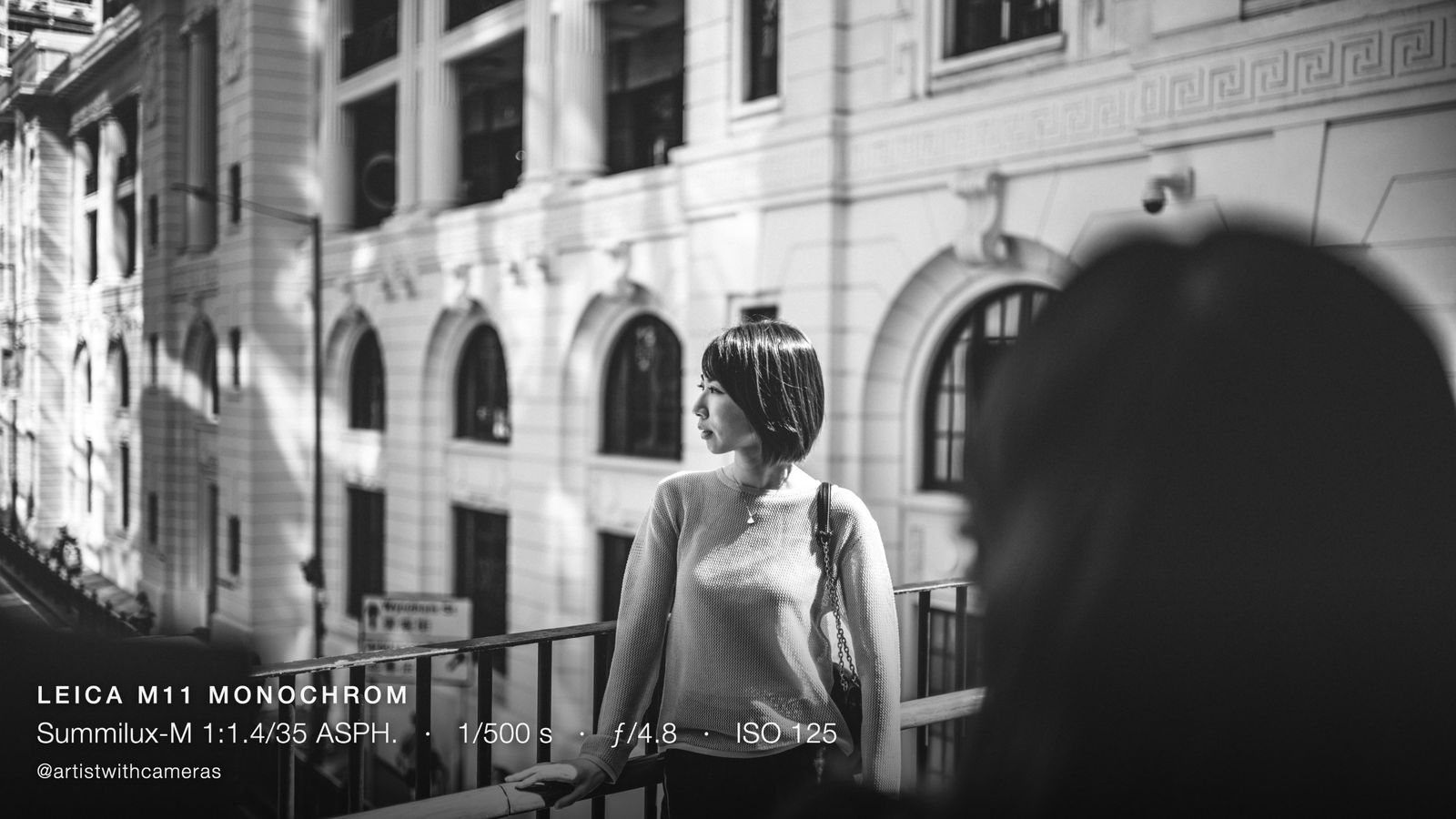
Light and shadow, the way Fan Ho taught us to look. Leica M11 Monochrom · Summilux-M 35mm f/1.4 ASPH. · 1/500 s · f/4.8 · ISO 125
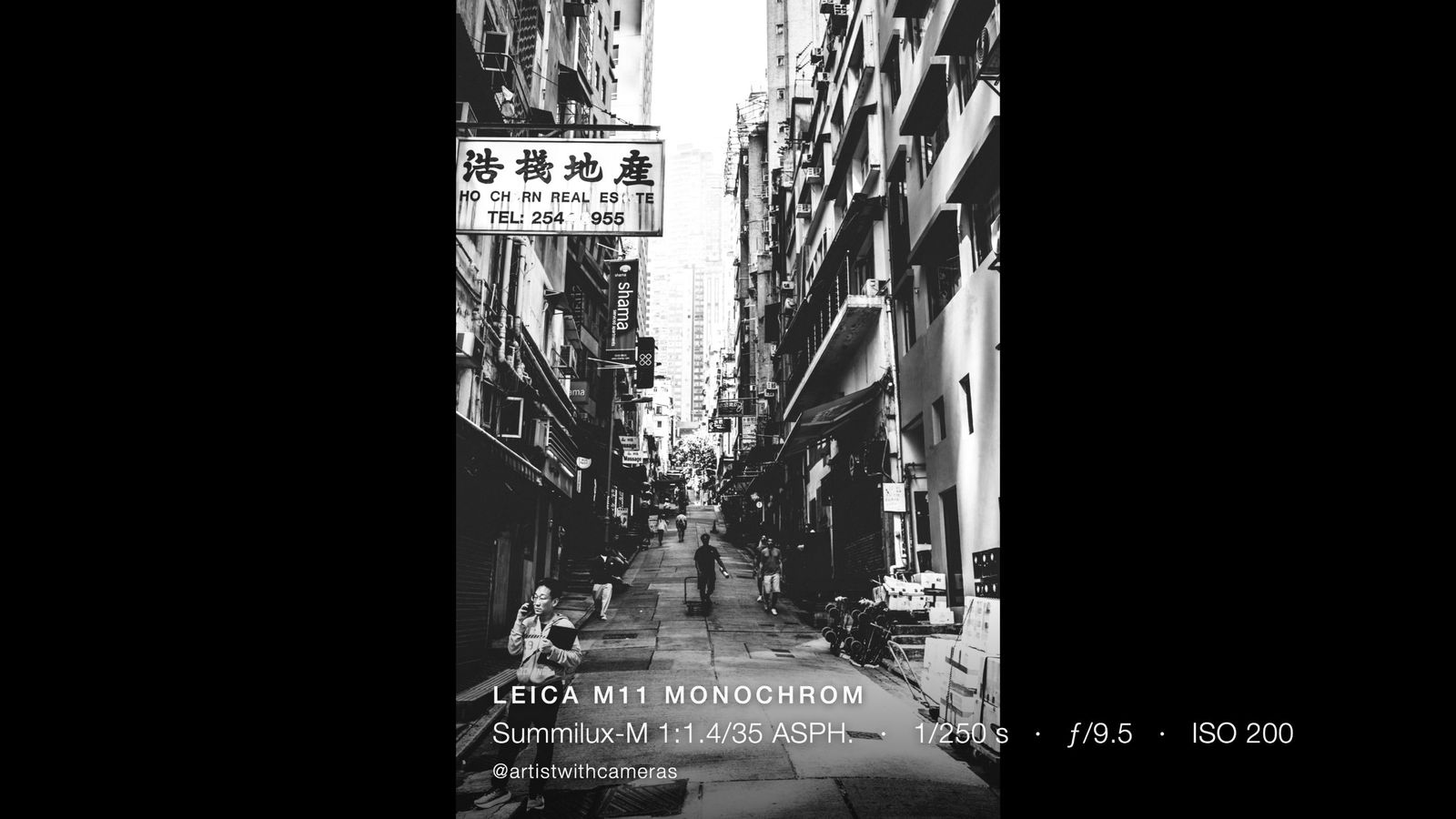
A lane climbing toward the Mid-Levels. Leica M11 Monochrom · Summilux-M 35mm f/1.4 ASPH. · 1/250 s · f/9.5 · ISO 200
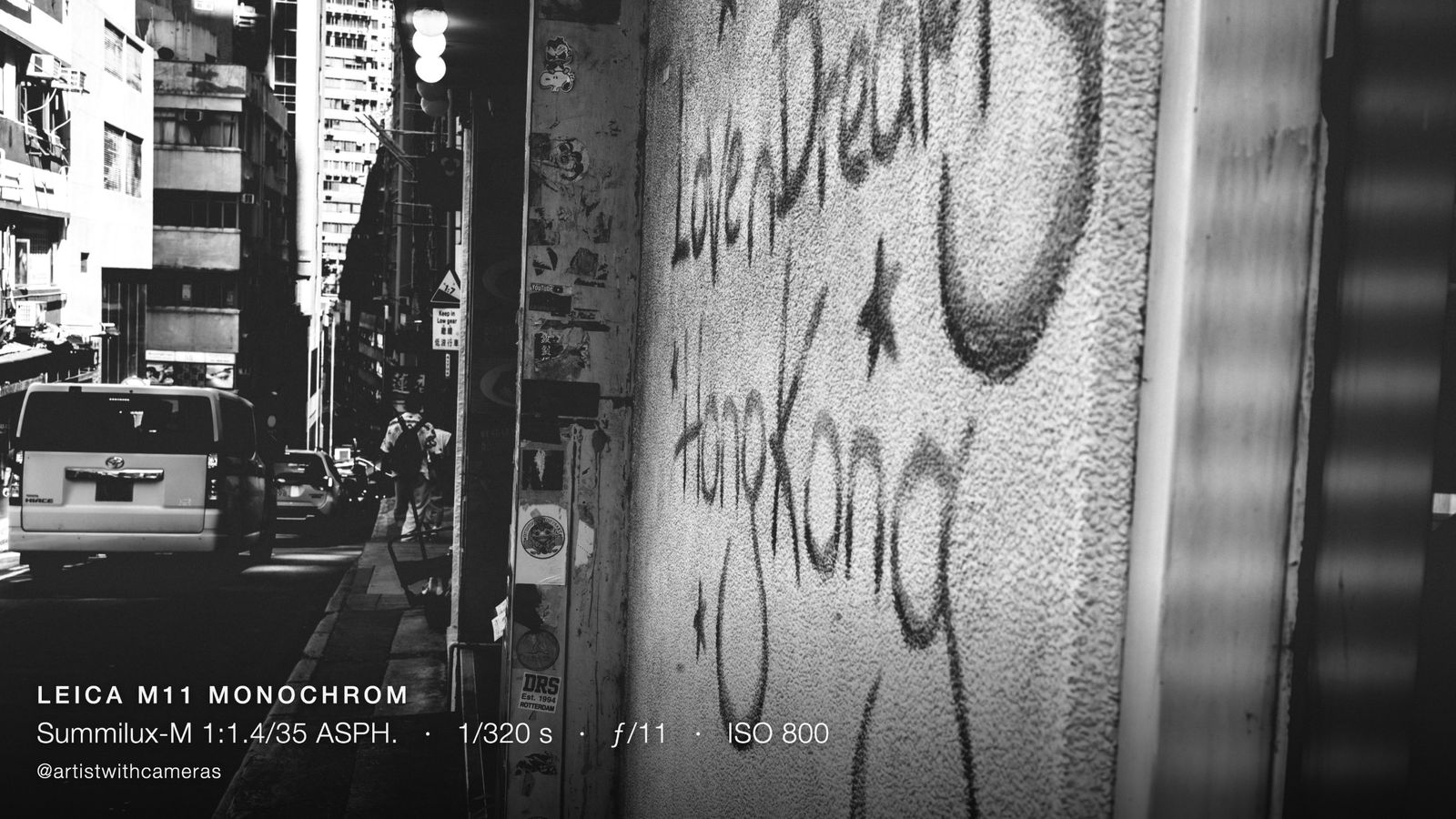
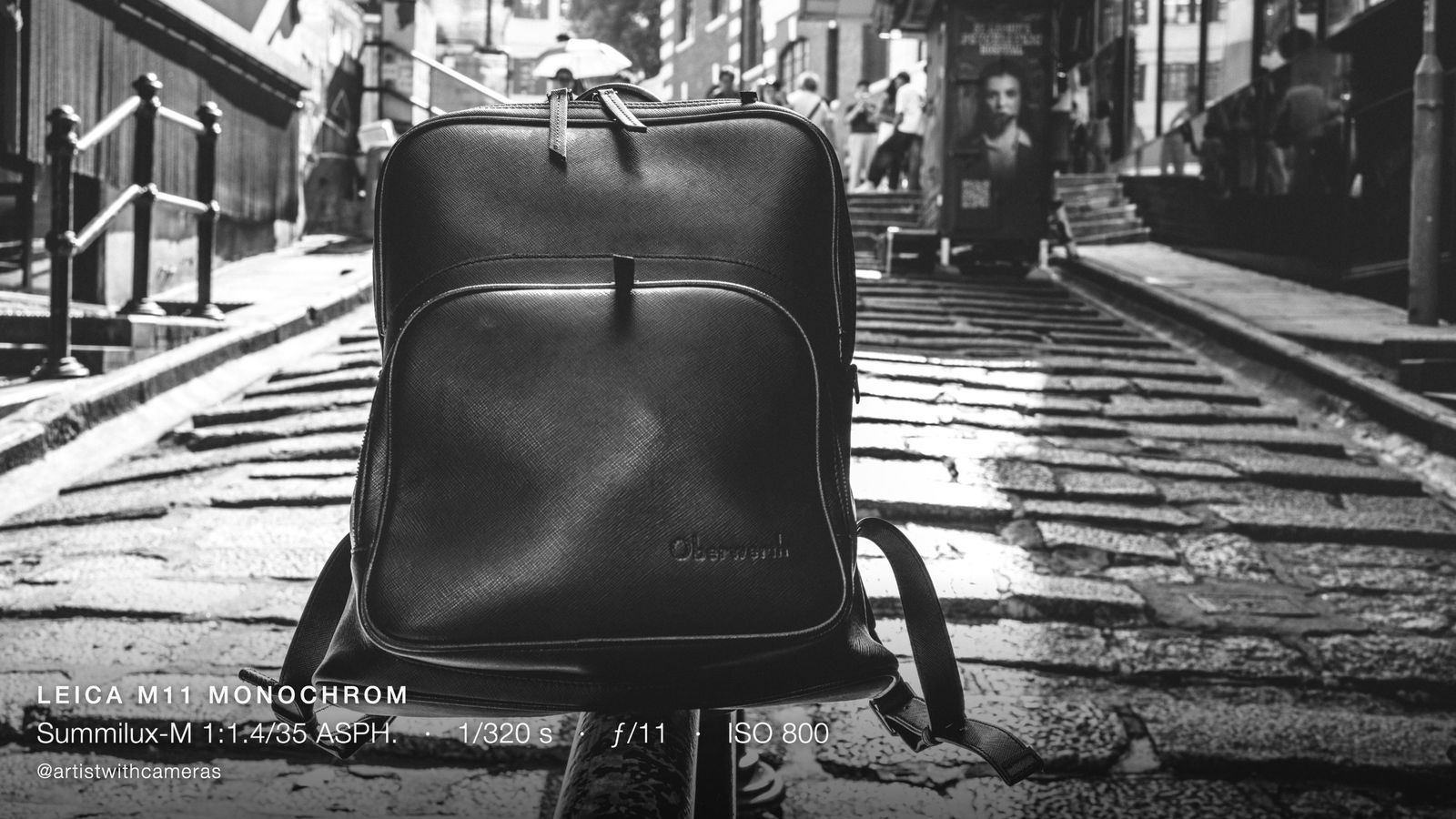
Love, Hong Kong. Leica M11 Monochrom · Summilux-M 35mm f/1.4 ASPH. · 1/320 s · f/11 · ISO 800
Up and down. A stairway as a stage, in the spirit of Fan Ho. Leica M11 Monochrom · Summilux-M 35mm f/1.4 ASPH. · 1/320 s · f/16 · ISO 1600
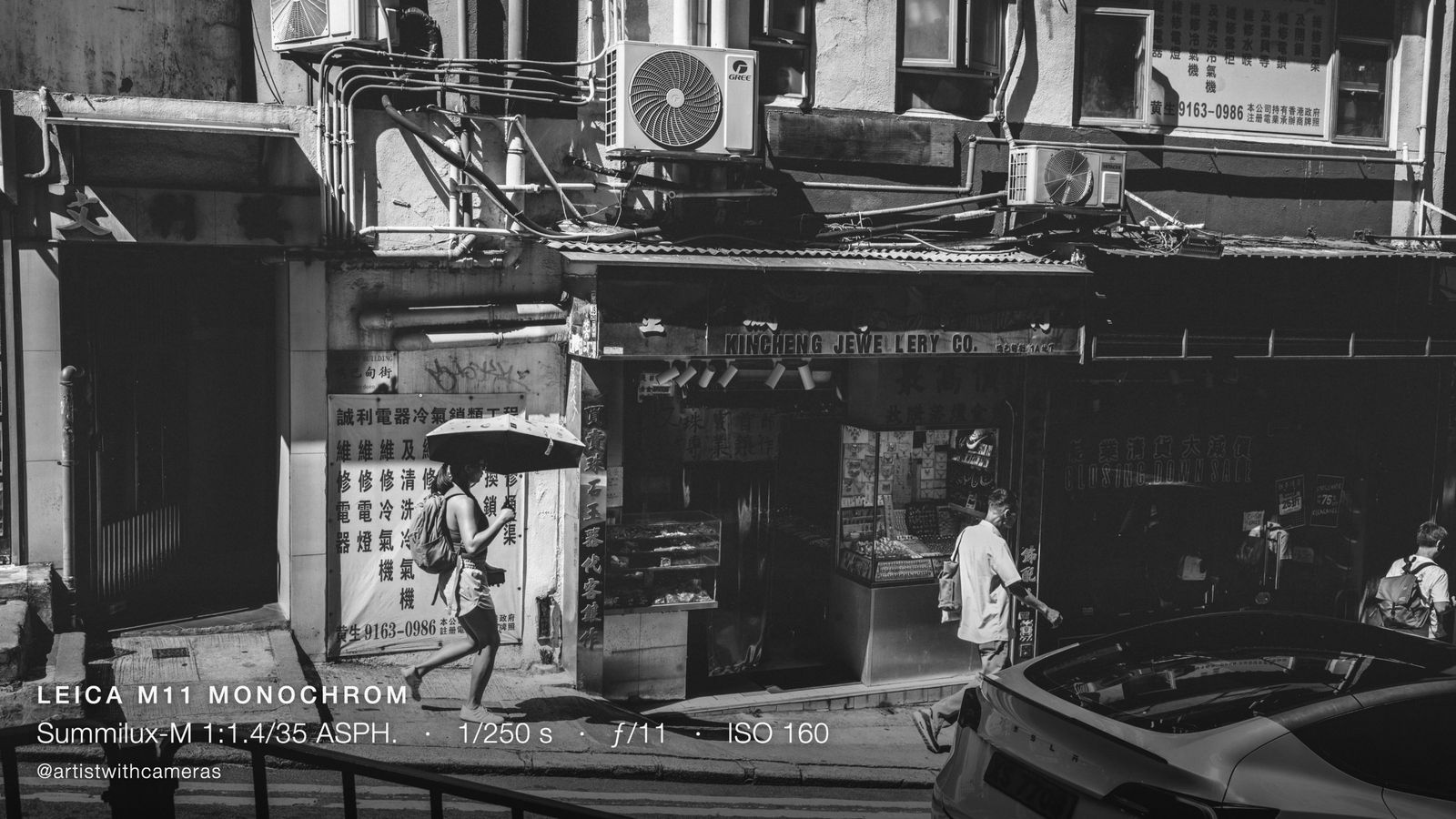
Two directions in the noon sun. Leica M11 Monochrom · Summilux-M 35mm f/1.4 ASPH. · 1/250 s · f/11 · ISO 160
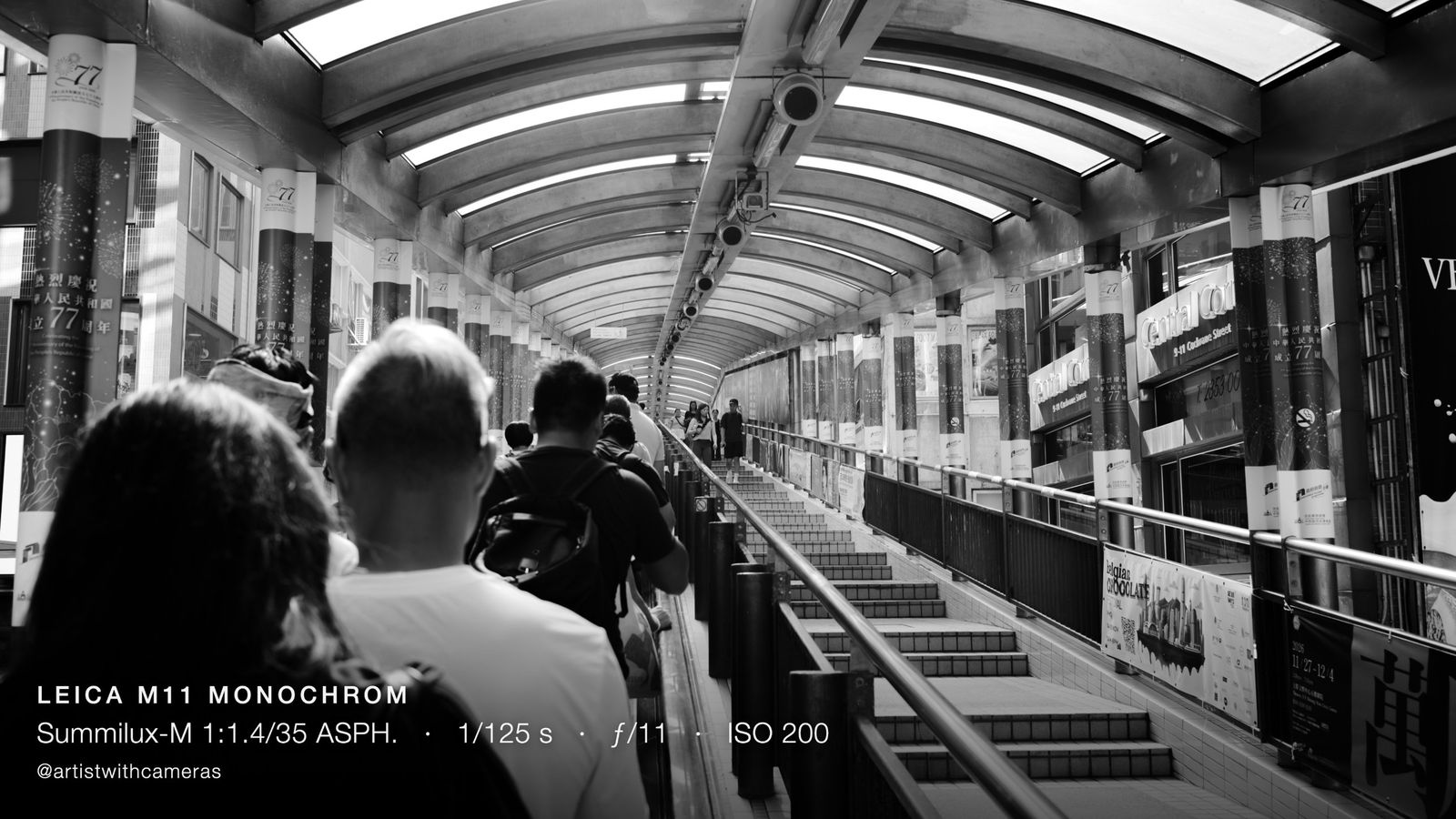
The Mid-Levels escalator, a modern route down the hill Fan Ho walked. Leica M11 Monochrom · Summilux-M 35mm f/1.4 ASPH. · 1/125 s · f/11 · ISO 200
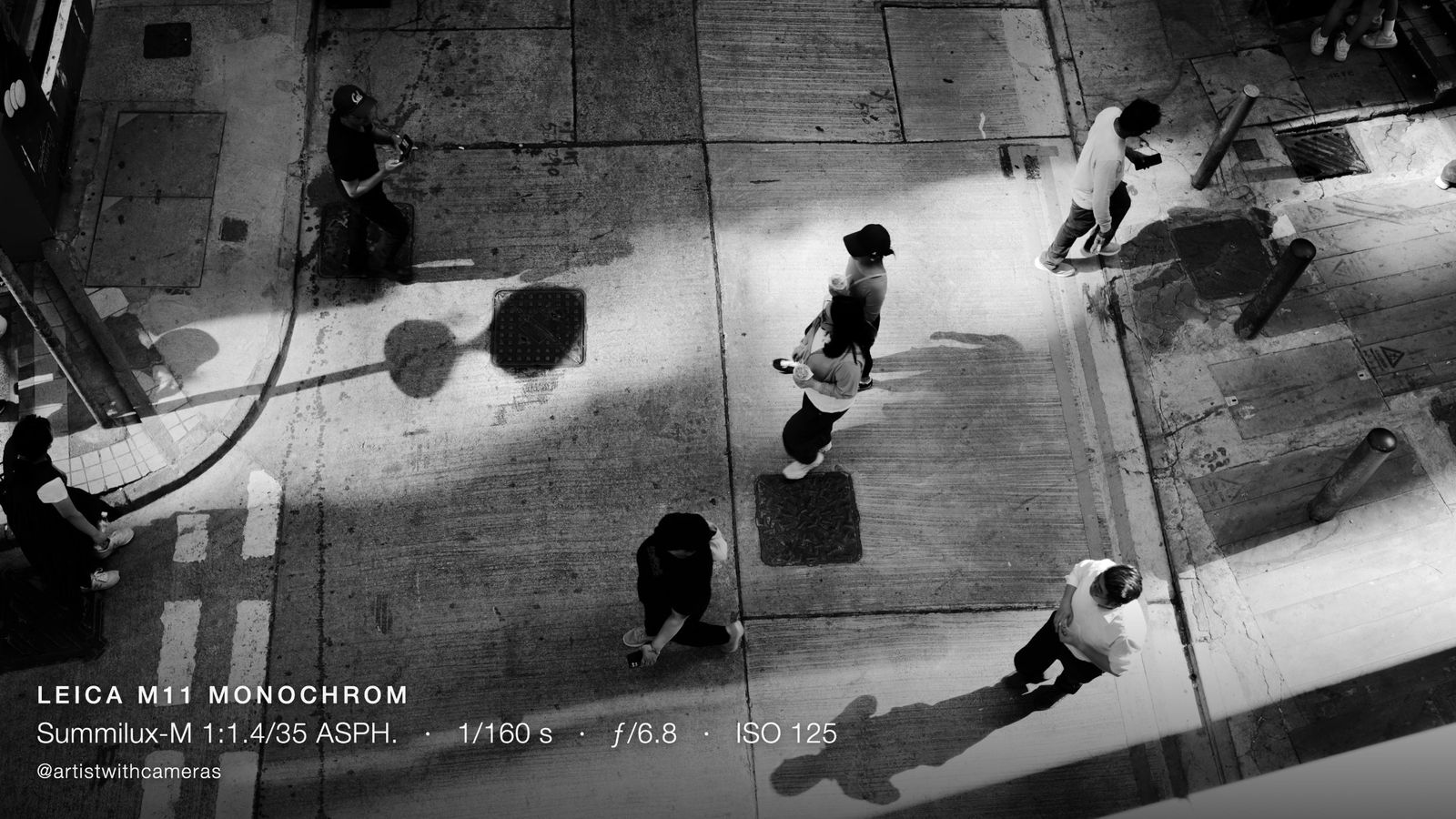
From above: shadows longer than the people casting them. Leica M11 Monochrom · Summilux-M 35mm f/1.4 ASPH. · 1/160 s · f/6.8 · ISO 125
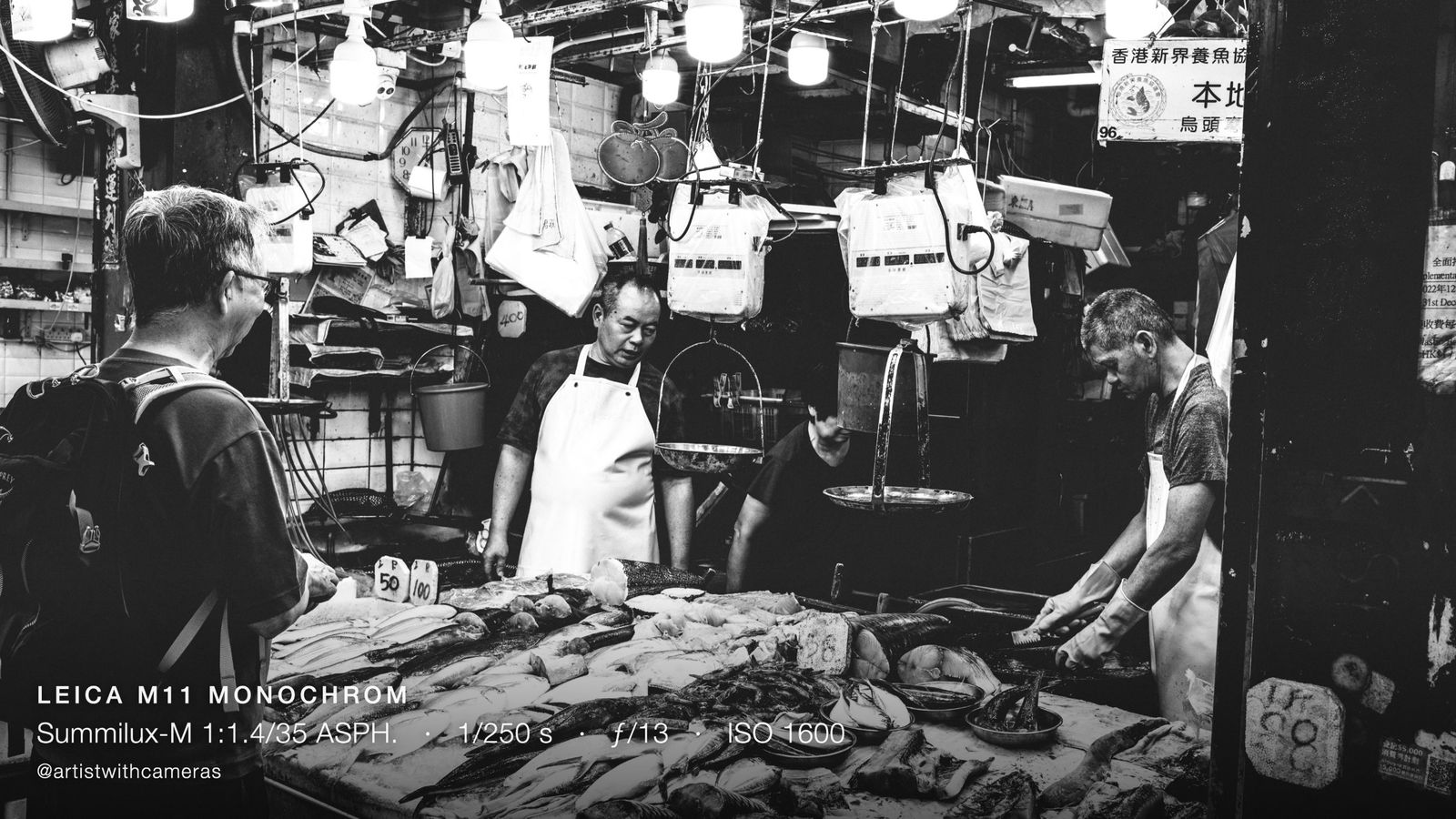
The wet market, the kind of scene Fan Ho returned to again and again. Leica M11 Monochrom · Summilux-M 35mm f/1.4 ASPH. · 1/250 s · f/13 · ISO 1600
Seeing the city in monochrome
Fan Ho said color did not fit his work. Black and white let him step back from everyday life and show the geometry of it. That is why I brought the Leica M11 Monochrom. Its sensor records only light, no color at all, so I was forced to see the way he did: in tones, edges and contrast.
Hong Kong rewards that way of seeing. Bright sun cuts hard lines down the stairs, shop signs glow against dark doorways, and every railing throws a pattern across the stone. Half the work is simply waiting for someone to walk into the light.
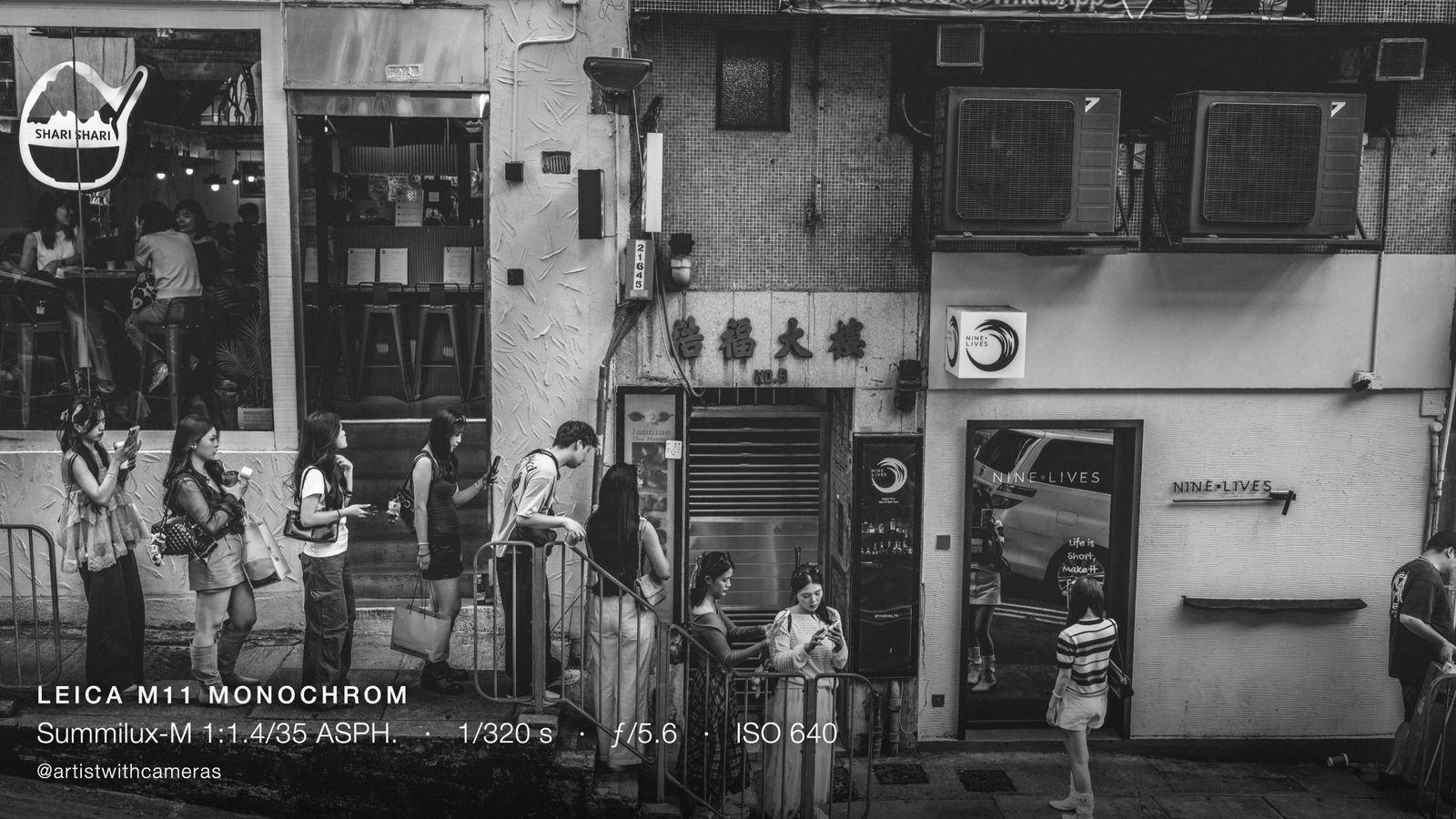
Waiting on the slope. Hong Kong is a city of queues and stairs. Leica M11 Monochrom · Summilux-M 35mm f/1.4 ASPH. · 1/320 s · f/5.6 · ISO 640
What the Q Backpack carried
A day tracing Fan Ho's steps means hours on foot, up and down some of the steepest streets in any city. I wanted everything on my back and both hands free. The Oberwerth Q Backpack carried all of it:
My Leica M11 Monochrom.
Two lenses: the Summilux-M 35mm f/1.4 ASPH. for the streets and the Shoten Tribute 01 50mm f/1.1 for portraits and low light. It is 6-bit coded as a Noctilux, so Lightroom applies the right lens profile.
My Osmo video camera, for the behind-the-scenes footage.
Passports, and the rest of my travel accessories.
The camera and lenses ride in the padded section, and the front pocket keeps passports and small things where I can reach them without taking the bag off. On a humid Hong Kong afternoon that matters: you stop at the top of a staircase, swing the camera up, and the moment is still there.
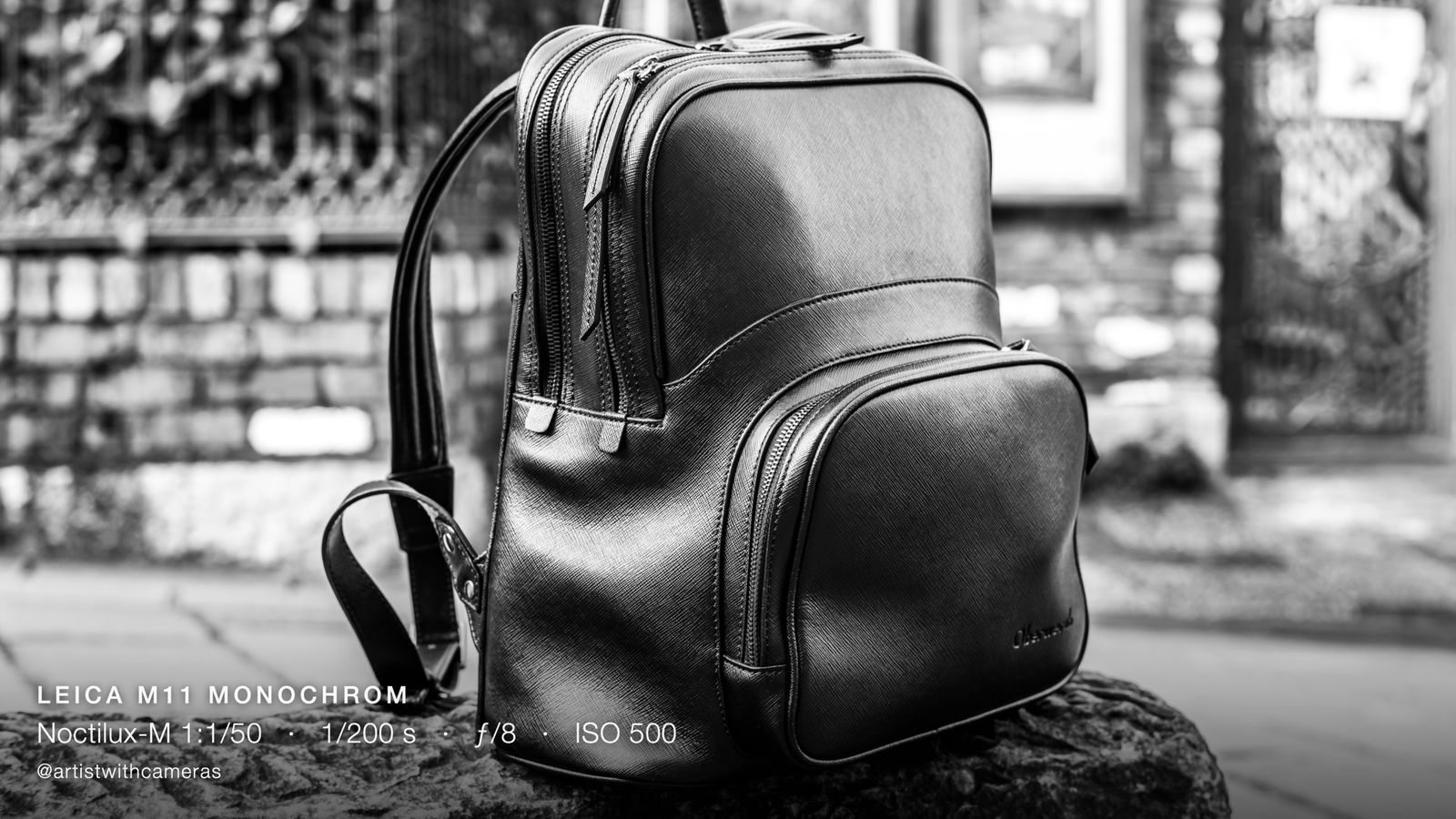
The Q Backpack. Leica M11 Monochrom · Shoten Tribute 01 50mm f/1.1 (6-bit coded as a Noctilux, so the frame reads Noctilux) · 1/200 s · f/8 · ISO 500Hong Kong's stone stairways, another of Fan Ho's stages. Leica M11 Monochrom · Summilux-M 35mm f/1.4 ASPH. · 1/320 s · f/11 · ISO 800The Central Market stairway of Fan Ho's Market Stairway (1959), with the Q Backpack at the foot of the steps. Leica M11 Monochrom · Summilux-M 35mm f/1.4 ASPH. · 1/60 s · f/16 · ISO 10000
A bag that looks right in the frame
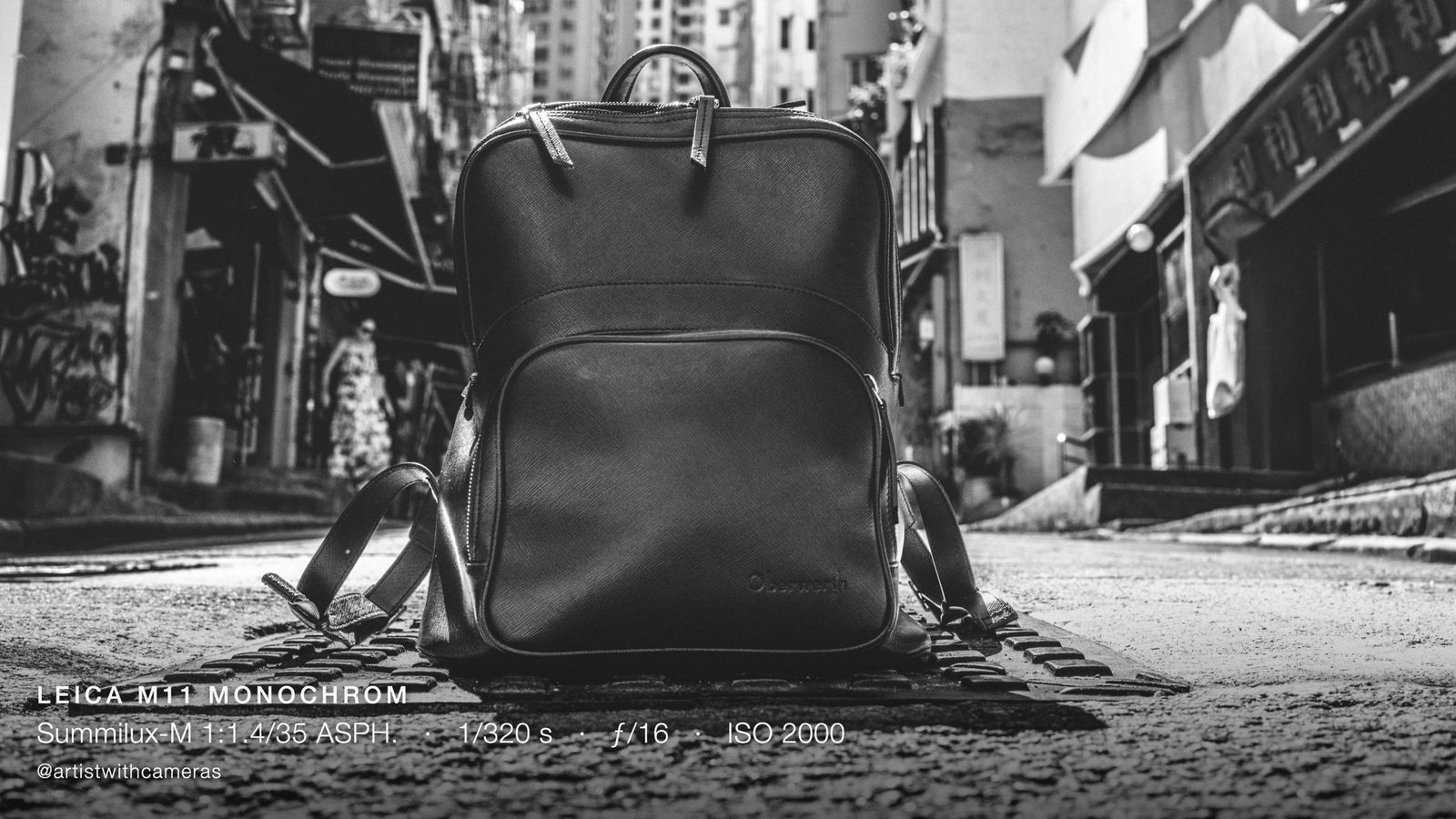
Through the day I kept setting the backpack down in the scene: at the foot of the Central Market stairs, on a railing above a stone stairway, on a manhole cover in a quiet lane. Black leather against stone and steel feels at home in a monochrome city. It reads as part of the place, not as equipment, and that is how I like to work on the street: quietly, without announcing myself.
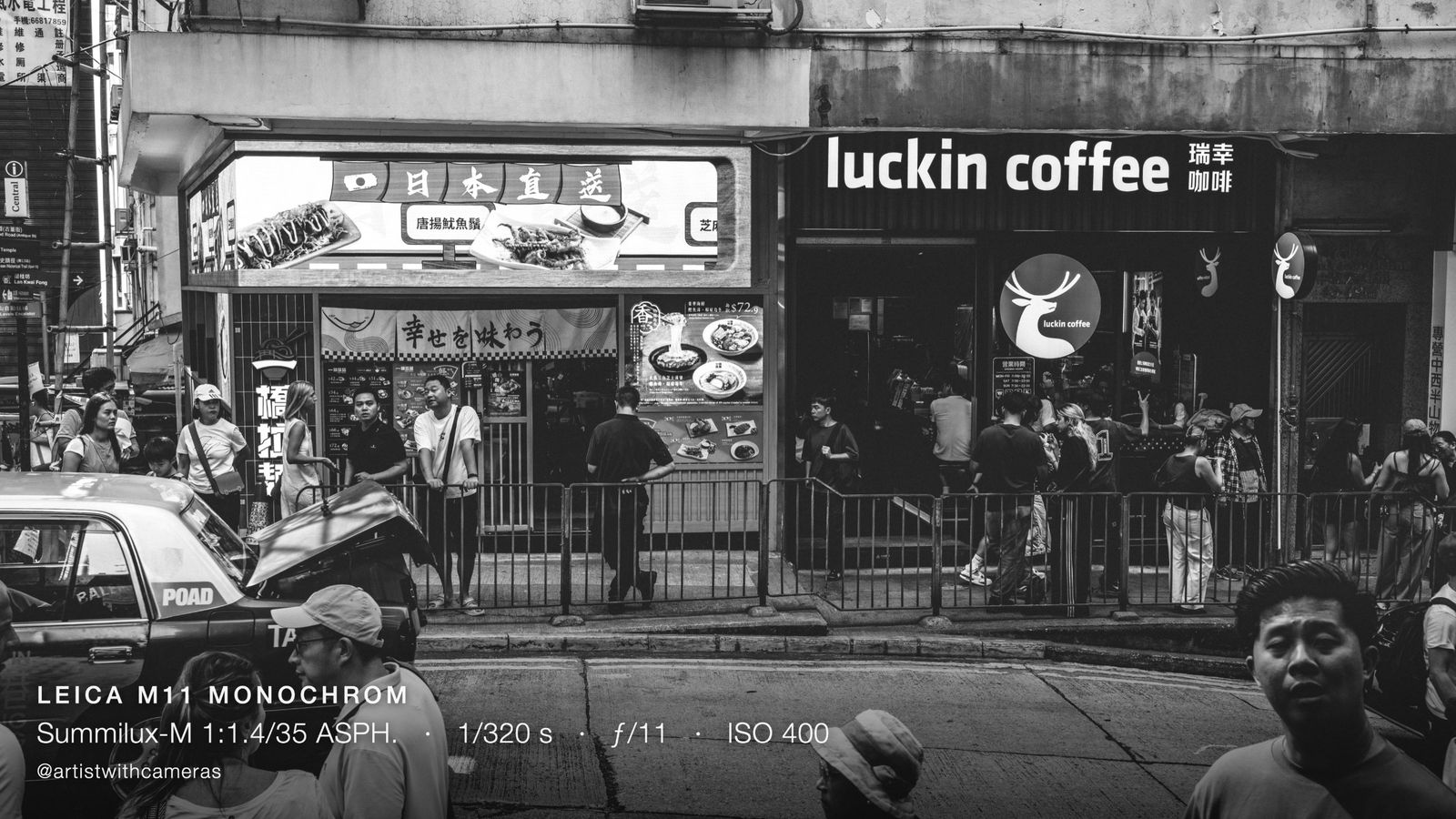
At street level. Leica M11 Monochrom · Summilux-M 35mm f/1.4 ASPH. · 1/320 s · f/16 · ISO 2000Central, where Fan Ho's walks used to end. Leica M11 Monochrom · Summilux-M 35mm f/1.4 ASPH. · 1/320 s · f/11 · ISO 400
Who it is for
If you travel with one camera body, two lenses and a small video camera, and you want to walk all day with your hands free, the Q Backpack is the bag I would choose. It holds a full kit without the bulk of a technical camera pack, and it is as comfortable on the stairways of the Mid-Levels as it is in a gallery or a restaurant afterward. Prefer to carry less? Read about the Q Bag in Shinjuku, or compare them in Q Bag vs Q Backpack vs M Bag.
Standing on Fan Ho's stairway taught me what his pictures always said: the light does the work if you are patient enough to wait for it. Next time you are in Hong Kong, walk down from the Mid-Levels with a camera and see what you find.